📦FREE SHIPPING ON ALL ORDERS🍄 Dismiss
Skip to content
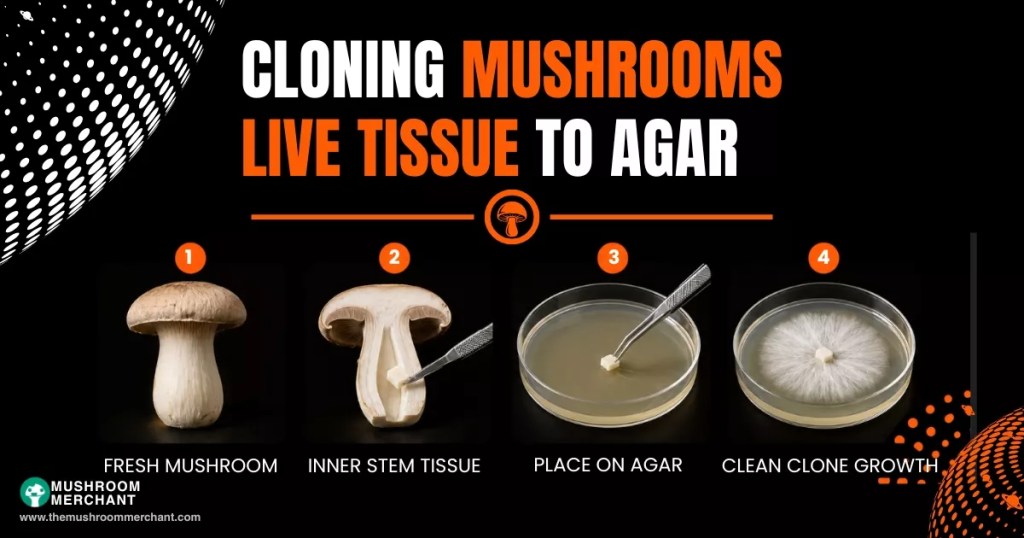
Mushroom cloning is one of the most effective techniques for preserving and reproducing specific genetics from a mushroom you already know and love. Instead of starting from spores, which can produce unpredictable results, cloning allows you to capture the exact traits of a healthy, vigorous specimen. In this guide, we’ll cover what mushroom cloning is, why it’s valuable, the tools you’ll need, and how to do it successfully.
Cloning is especially useful when you’ve found a mushroom with traits you want to preserve, such as exceptional size, unique coloration, or resistance to contamination. Instead of rolling the genetic dice with spores, cloning ensures that future flushes carry the exact same qualities. It’s a technique used by both hobbyists and commercial growers to maintain reliable, repeatable results across multiple harvests.
Mushroom cloning is the process of taking a tissue sample from a living mushroom and using it to grow new mycelium. The goal is to create a genetically identical culture to the original specimen. This means you can reliably reproduce mushrooms with desirable qualities, such as high yield, unique shape, fast colonization, or disease resistance.

Mushroom cloning is a valuable skill that opens the door to consistent, high-quality harvests. Whether you’re a beginner looking to preserve a unique find or an experienced grower aiming for optimal yields, mastering cloning techniques will give you more control over your cultivation results.
For mushroom cloning, MEA Premix Powder gives you a simple way to make consistent agar plates for live tissue transfers. It helps provide the nutrients needed for clean mycelium growth after a small piece of inner mushroom tissue is placed on agar.
Mushroom cloning is the process of taking a tissue sample from a living mushroom to grow a genetically identical culture.
Cloning mushrooms ensures you keep the exact traits you want, while spores can produce varied and unpredictable results.
You can clone most edible and medicinal mushrooms as long as you start with a fresh, healthy specimen.
To clone a mushroom, you’ll need a sterile workspace, scalpel, agar plates or liquid culture, gloves, and proper sterilization supplies.
Most mushroom clones will show visible mycelium growth within a few days to a week, depending on species and conditions.
Learn More About Mycology
Get updates and learn about growing mushrooms