📦FREE SHIPPING ON ALL ORDERS🍄 Dismiss
Skip to content
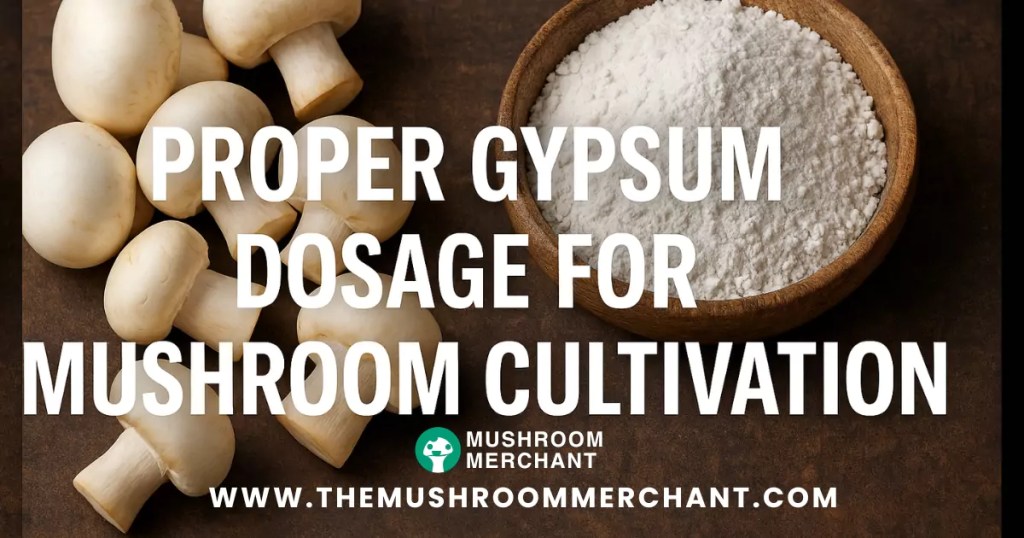
In mushroom cultivation, achieving optimal substrate conditions is key to healthy mycelium growth and bountiful harvests. One often overlooked but highly valuable addition to substrate is gypsum. While it may seem like a simple additive, the proper gypsum dosage for mushroom cultivation can significantly impact the success of your grow. This guide will walk you through the role of gypsum, how much to use, and why it matters.
Gypsum (calcium sulfate dihydrate) is prized in mushroom cultivation for its ability to supply calcium and sulfur—two essential minerals that support vigorous mycelial development. Beyond nutrition, gypsum improves substrate texture by preventing clumping, allowing better airflow and moisture distribution throughout the growing medium.
Importantly, unlike lime, gypsum does not significantly raise pH. Instead, it acts as a stabilizer, helping maintain a consistent environment where mycelium can thrive.
The right dosage depends on the stage of cultivation and the substrate type.
For grain spawn (such as rye or millet), a general rule is:
When working with bulk substrates like coco coir or straw, growers commonly mix in 5–10% gypsum by weight. This ensures enough mineral support and structural improvement without overloading the substrate.
More gypsum does not mean better results. Excessive gypsum can lead to a compacted substrate, reducing oxygen flow and hindering colonization. It can also create minor imbalances in substrate salinity, which may negatively affect sensitive mushroom species.
To avoid these issues, stick to established guidelines and ensure you thoroughly mix the gypsum into your substrate for even distribution.
By paying attention to gypsum dosage and application, you can strengthen your substrate and set the stage for successful mushroom production.
The recommended gypsum dosage for mushroom grain spawn is about 1 teaspoon per quart jar or 2–5% of the dry grain weight.
Yes, overusing gypsum can compact the substrate and hinder mycelial growth. Stick to the recommended 2–10% range based on substrate type.
No, gypsum mainly acts as a pH stabilizer, providing calcium and sulfur without significantly altering the substrate’s pH.
No, only lab or horticultural-grade gypsum should be used. Construction materials like drywall may contain harmful additives.
Gypsum supplies essential minerals, improves substrate texture, and helps maintain consistent growing conditions, supporting healthy mushroom growth.
Learn More About Mycology
Get updates and learn about growing mushrooms