📦FREE SHIPPING ON ALL ORDERS🍄 Dismiss
Skip to content
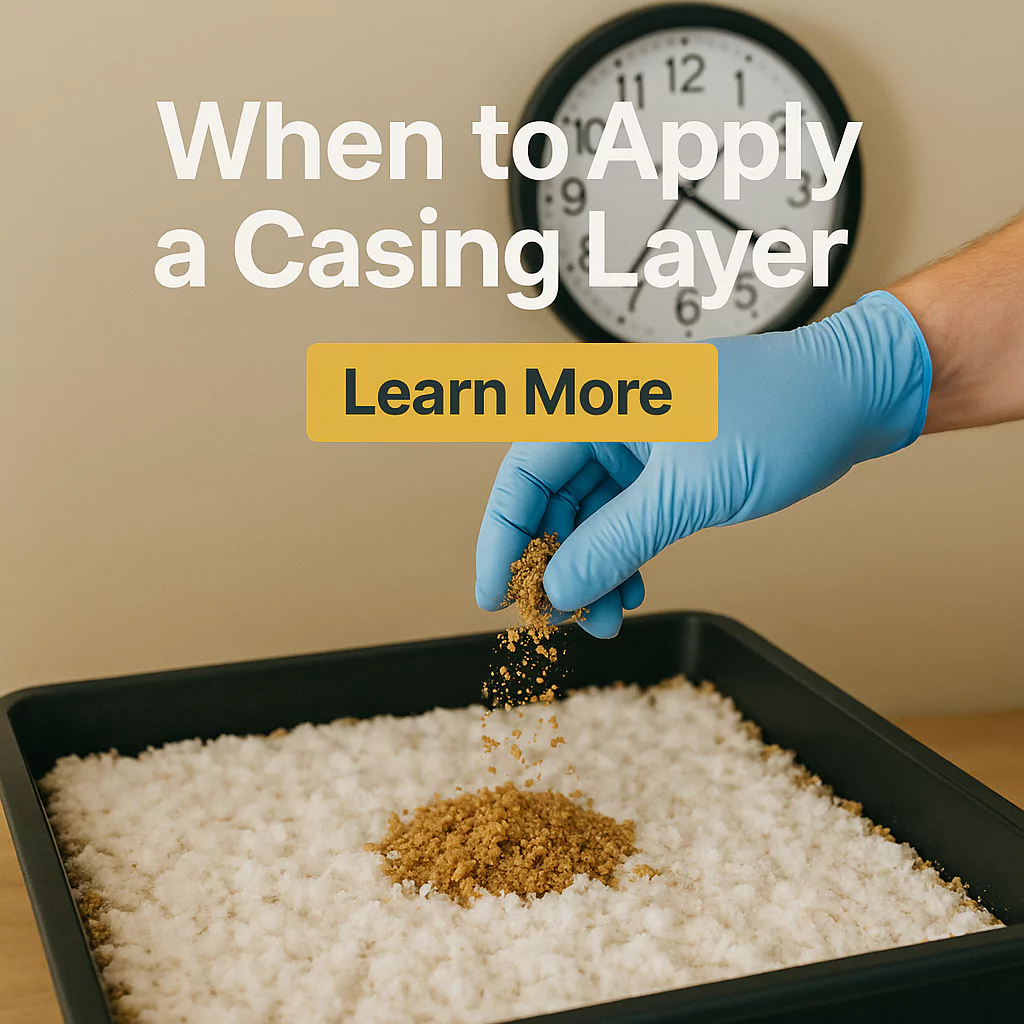
Applying a casing layer at the right time can significantly improve your mushroom yield. In this guide, you’ll learn exactly when to apply a casing layer, why timing matters, and how to do it properly for best results.
Whether you’re growing oyster mushrooms, Psilocybe cubensis, or other species, applying the casing layer at the correct stage supports strong pin formation and consistent fruiting.
A casing layer is a thin, non-nutritive top layer applied to a fully colonized mushroom substrate. Its purpose is to help retain surface moisture, create a microclimate for pinning, and protect the mycelium during the early stages of fruiting.
Recommended materials for casing layers include:
These materials are inert, easy to apply, and highly effective at holding moisture without feeding contaminants.
The best time to apply a casing layer is when your mushroom substrate is 100 percent colonized. This means the entire surface is covered in white mycelium, and no bare substrate or uncolonized patches remain.
Waiting for full colonization helps reduce the risk of mold or bacterial growth and ensures the mycelium is ready for fruiting.
Applying the casing layer too early can trap contaminants below the surface or slow colonization. Applying it too late can result in surface dryness or premature pinning without the benefits of moisture retention.
Applying at the right time:
Some advanced cultivators apply the casing layer immediately after mixing grain spawn with bulk substrate. While this technique can reduce surface exposure, it also makes colonization harder to monitor and is more prone to error.
For most growers, especially those using monotubs or grow bags, applying the casing layer after full colonization is the safer and more effective choice.
Follow these steps for best results:
Applying a casing layer sounds simple, but there are a few common pitfalls that can seriously affect your mushroom yield. Here’s what to watch out for:
One of the biggest mistakes new growers make is applying the casing layer before the substrate is fully colonized. Doing this can trap contaminants beneath the surface and prevent the mycelium from properly consolidating.
Always wait until your substrate is 100% colonized — no bare spots, no exposed grains — and give it an extra 1 to 3 days to strengthen before casing. Knowing when to apply a casing layer makes a huge difference in overall quality.
Casing layers should NOT be nutrient-rich. Materials like peat moss, compost, or manure can invite contamination. The best option is an inert, moisture-retentive blend like our premium 50/50 mix of coco coir and vermiculite, developed specifically for mushroom fruiting. It holds humidity without feeding bacteria or mold.
The goal of a casing layer is to create a microclimate for fruiting, not giving the mycelium nutrients. The casing layer should only be added when the mycelium has consumed 100% of the substrate.
A casing layer that’s too thick can suffocate the mycelium and delay pinning. Too thin, and it won’t hold enough moisture or provide consistent coverage. The sweet spot is 0.25 to 0.5 inches. Spread it evenly and don’t compact it down — let it breathe.
Your casing layer should stay consistently moist — not soaking wet, but never dry. If it dries out, pinning will stall or stop entirely. Lightly mist the surface daily during early fruiting to maintain surface humidity.
Always apply the casing layer in a clean environment. Use gloves, clean tools, and avoid breathing or talking directly over your grow. Even a high-quality casing mix can become contaminated if introduced carelessly.
To maximize success, apply the casing layer after the substrate is fully colonized and has consolidated for 1–3 days. This timing gives the mycelium the best chance to initiate strong, healthy fruiting.
For best results, use a clean, sterilized casing mix like our pre-blended 50/50 coco coir and vermiculite. It’s designed specifically for mushroom growers to create ideal surface conditions and promote heavy flushes.
You should apply the casing layer once your substrate is 100% colonized with mycelium and has remained stable for at least 24 to 72 hours.
A 50/50 mix of coco coir and vermiculite is recommended. This blend retains moisture effectively without adding nutrients that could attract contaminants.
No. Applying a casing layer too early can trap contaminants under the surface and slow colonization. Always wait for complete colonization before casing.
The optimal thickness is between 0.25 and 0.5 inches. This provides enough moisture retention without restricting airflow or delaying fruiting.
No. Some species, like oyster mushrooms, do not benefit significantly from a casing layer. However, it is highly recommended for species like Psilocybe cubensis to encourage even pin formation and higher yields.
Learn More About Mycology
Get updates and learn about growing mushrooms