📦FREE SHIPPING ON ALL ORDERS🍄 Dismiss
Skip to content
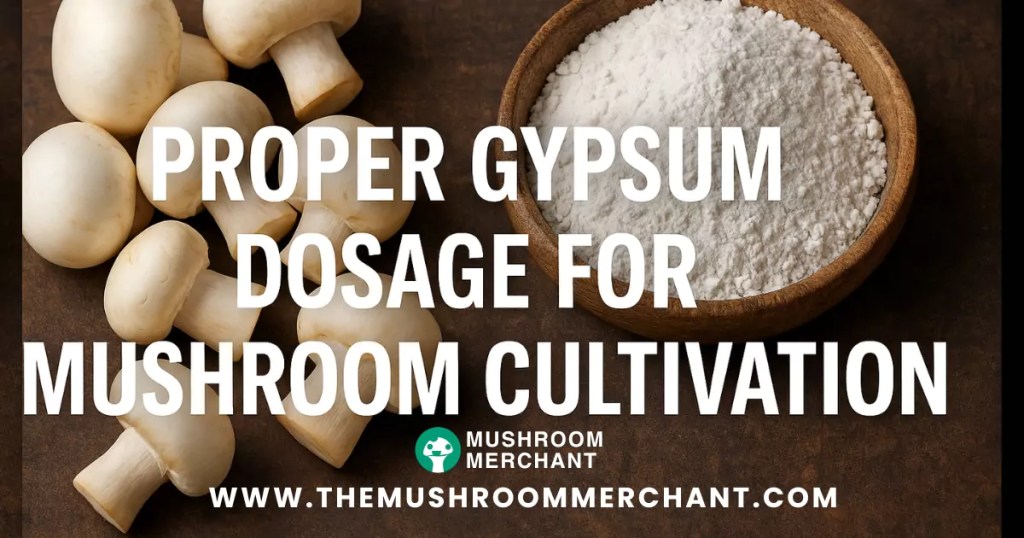
Gypsum is a common mineral supplement used in mushroom cultivation to improve substrate structure and provide calcium and sulfur.
The right amount depends on the material being prepared and the growing method being used. This guide covers practical starting points for adding gypsum to grain and bulk substrate.
Gypsum is calcium sulfate dihydrate, a naturally occurring mineral commonly added to mushroom-growing materials.
In cultivation, gypsum can help:
Gypsum does not raise pH as strongly as lime, which makes it useful when you want to add minerals without making a large change to substrate alkalinity.
There is no single dosage that works for every species or substrate.
For grain, gypsum is usually added in small amounts during hydration or preparation to help reduce sticking and improve handling.
A practical starting point is about 1 teaspoon per quart of prepared grain, then adjust based on the grain type and batch size.
For bulk substrates, gypsum is commonly added as a smaller portion of the overall mix rather than as a major ingredient.
For coco coir and similar blends, start with a modest amount and adjust based on your recipe and the texture you want to achieve.
Gypsum is commonly used with grains such as rye, millet, and wheat.
It can help keep hydrated kernels from sticking together and can make the grain easier to mix after colonization begins.
When preparing grain:
Small amounts are usually enough.
Gypsum can also be added to bulk substrates such as coco coir, vermiculite blends, straw-based substrates, and hardwood-based mixes.
Its main role is to add minerals and improve physical structure.
Mix the gypsum evenly throughout the substrate before use.
For coir-based blends, it is usually better to start with a consistent recipe and adjust only after observing how the substrate performs.
Yes. Adding more gypsum does not necessarily improve results.
Too much can make a mix heavier, dustier, or less balanced than intended.
If you are testing a new recipe, start with a moderate amount and keep notes so you can compare results between batches.
Use a clean gypsum product intended for agricultural, horticultural, food, or laboratory applications.
Avoid drywall or other construction materials because they may contain additives that are not intended for cultivation.
Use the same measurement method each time so you can compare results accurately.
Distribute gypsum evenly through grain or substrate instead of leaving concentrated pockets.
Record the amount used, the substrate type, and the results.
This makes it easier to adjust future batches.
Gypsum is a simple way to add calcium and sulfur while improving the texture of grain and substrate.
The best dosage depends on the material, species, and recipe being used. Start with a moderate amount, mix it evenly, and adjust based on the results of your own growing process.
The recommended gypsum dosage for mushroom grain spawn is about 1 teaspoon per quart jar or 2–5% of the dry grain weight.
Yes, overusing gypsum can compact the substrate and hinder mycelial growth. Stick to the recommended 2–10% range based on substrate type.
No, gypsum mainly acts as a pH stabilizer, providing calcium and sulfur without significantly altering the substrate’s pH.
No, only lab or horticultural-grade gypsum should be used. Construction materials like drywall may contain harmful additives.
Gypsum supplies essential minerals, improves substrate texture, and helps maintain consistent growing conditions, supporting healthy mushroom growth.
Learn More About Mycology
Get updates and learn about growing mushrooms