📦FREE SHIPPING ON ALL ORDERS🍄 Dismiss
Skip to content

Mushroom Merchant Sterilized Rye Grain Bags are fully hydrated, sterilized, sealed, and ready for inoculation. Each bag includes a self-healing injection port for liquid culture and a filter patch for gas exchange during colonization.
This guide covers how to inoculate, colonize, break and shake, and prepare your grain for the next stage of gourmet or specialty mushroom cultivation.
Before starting, gather:
Have everything ready before handling the grain bag.
Inspect the bag before inoculation.
The rye should appear hydrated without large amounts of standing liquid. Some condensation inside the bag can be normal, especially after temperature changes during shipping.
Do not use the bag if you notice:
Keep the bag sealed until you are ready to inoculate it.
Choose a clean area with minimal airflow.
Before beginning:
Avoid working directly under fans, vents, open windows, or other strong sources of moving air.
A still air box or flow hood can also be used for additional workspace control.
Gently mix the liquid culture syringe to distribute the mycelium throughout the solution.
Attach a new sterile needle without touching the needle or connection point.
Use a new sterile needle for each inoculation.
If your culture supplier provides specific instructions for the species being grown, follow those recommendations.
Locate the self-healing injection port on the front of the bag.
Wipe the injection port with 70% isopropyl alcohol and allow it to dry completely.
Then:
Avoid using excessive liquid culture. More liquid does not necessarily mean faster colonization and can add unnecessary moisture to the grain.
Keep the bag sealed during inoculation.
After inoculation, place the bag in a clean location and leave it undisturbed while the culture begins to grow.
Do not immediately break apart or mix the grain.
Keep the filter patch unobstructed so the bag can exchange gases normally.
Complete darkness is not required. Normal indirect room light is fine.
Avoid direct sunlight and strong heat sources.
The preferred colonization temperature depends on the mushroom species being grown.
For many gourmet mushroom species, approximately 68-75°F works well.
Always follow the recommended temperature range for the species you are cultivating.
Avoid placing the bag:
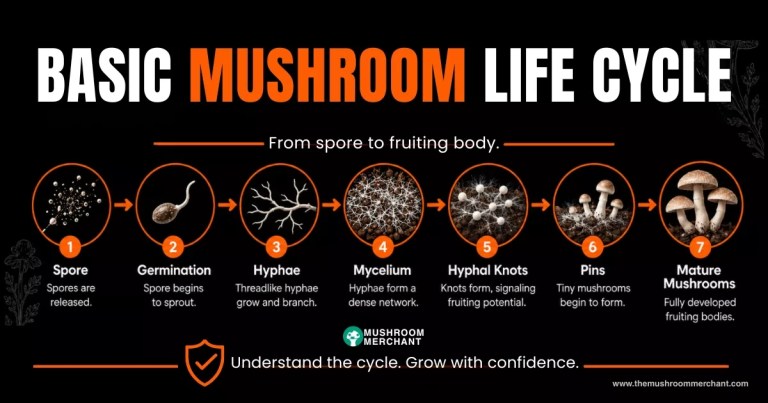
Healthy mycelium usually begins appearing as white growth around the inoculation area and gradually spreads through the rye.
Depending on the species, healthy mycelium may appear:
Different mushroom species can look noticeably different during colonization.
Lion’s mane, for example, may produce lighter and finer growth than many oyster mushroom varieties.
Colonization speed also varies by species, genetics, temperature, culture quality, and growing conditions.
Break and shake when roughly 20-30% of the grain is visibly colonized.
Mixing the bag redistributes colonized grain throughout the remaining rye and helps the bag colonize more evenly.
To break and shake:
Avoid putting unnecessary pressure on the filter patch or injection port.
The visible mycelium may appear reduced immediately after mixing. This is normal. Healthy growth should begin spreading again as the culture recovers.
One break and shake is enough for most grows.
A second mix may help if colonization becomes uneven, but repeated mixing can slow recovery.
Allow the mycelium time to regrow before deciding whether another mix is needed.
After mixing, allow the mycelium to continue growing until the grain is fully colonized.
A finished bag should show healthy mycelium throughout most or all of the visible rye.
Avoid opening the bag before colonization is complete.
Once fully colonized, the grain can be used as mushroom spawn and transferred to a substrate suited to the species being grown.
Different mushroom species prefer different substrates.
For example:
Always choose a substrate appropriate for the species you are cultivating. We offer Hardwood Substrate for compatible wood-loving edible mushrooms and CVG Substrate for growing methods that call for a coco coir, vermiculite, and gypsum blend. Both arrive hydrated and sterilized, ready to mix with fully colonized grain spawn. Choose the formula that matches your mushroom species and growing method.
Colonization speed depends on:
Some cultures grow faster than others.
Watch the progress of the mycelium rather than relying only on a fixed number of days.
Healthy mushroom mycelium is generally white, although appearance varies by species.
Possible warning signs include:
If the bag shows clear signs of contamination, keep it sealed and dispose of it.
For more information, see our Mushroom Contamination Guide.
If little or no visible growth appears, check the following.
Temperatures that are too low can slow growth, while excessive heat can stress the culture.
Check the recommended colonization range for the species being grown.
A weak, old, or nonviable culture may colonize slowly or fail to grow.
Start with a clean, active culture from a reliable source.
Liquid culture can sometimes contain contamination that is not obvious by appearance alone.
Testing culture on agar before use can help confirm clean growth.
Do not break and shake immediately after inoculation.
Allow visible mycelium to establish before mixing the grain.
Rye is widely used for mushroom spawn because it provides a good balance of moisture, nutrition, structure, and surface area.
Properly prepared rye:
Mushroom Merchant Sterilized Rye Grain Bags are hydrated, bagged, and sterilized before shipping so they are ready for inoculation.
Start with clean culture, properly prepared grain, and careful handling.
Mushroom Merchant Sterilized Rye Grain Bags arrive hydrated, sterilized, and ready for inoculation. Once the grain is fully colonized, transfer it to a substrate suited to the mushroom species being grown.
For a 3 lb sterilized grain bag, approximately 2-5 mL of liquid culture is a good general range. Using more liquid does not necessarily speed up colonization and can add unnecessary moisture to the grain.
Break and shake the bag when roughly 20-30% of the grain is visibly colonized. This helps distribute colonized kernels throughout the remaining grain and can support more even colonization.
For many gourmet mushroom species, a temperature range of approximately 68-75°F works well during colonization. Always follow the preferred temperature range for the specific species you are growing.
The grain is generally fully colonized when healthy mycelium has spread throughout most or all of the visible rye. The exact appearance can vary depending on the mushroom species.
If you see clear signs of unusual green, black, pink, red, or slimy growth, keep the bag sealed and dispose of it. Avoid opening a clearly contaminated bag indoors.
Learn More About Mycology
Get updates and learn about growing mushrooms